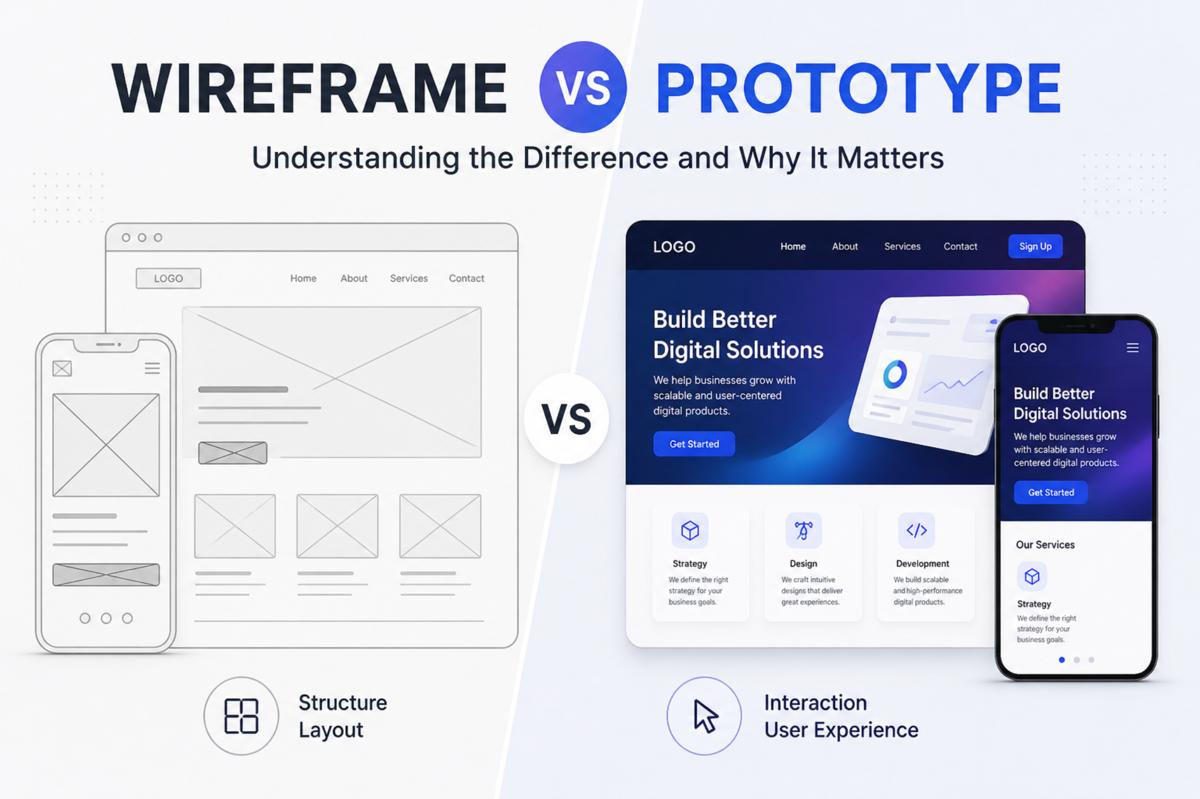
Understanding Wireframe vs Prototype is essential in digital product design because both play a key role in how a product is planned, tested, and eventually built. Although they are often used together, they serve very different purposes in the product development process.
In simple terms, wireframes focus on structure, while prototypes focus on interaction. Knowing the difference helps teams build digital products more efficiently, with fewer mistakes and clearer direction from start to finish.
What is a Wireframe?
A wireframe is a basic visual blueprint of a digital product that focuses on structure rather than appearance. It shows how elements like text, images, buttons, and sections are arranged on a page or screen.
At this stage, design details such as colors, typography, or branding are intentionally ignored. The purpose is to define layout and hierarchy so teams can agree on structure before moving forward.
Wireframes are usually created in the early stage of product development and act as the foundation for design decisions later.
What is a Prototype?
A prototype is an interactive model of a digital product that demonstrates how the final product will work. Unlike wireframes, prototypes allow users or stakeholders to click, navigate, and experience the flow of the product.
The main goal of a prototype is to test interaction and usability before development begins. It helps teams understand whether the user experience feels natural and whether the product functions as intended.
Prototypes can range from simple clickable flows to highly detailed simulations depending on the stage of development.
Why the Difference Between Wireframe and Prototype Matters
Understanding Wireframe vs Prototype is important because it directly impacts how efficiently a digital product is designed and built.
1. Prevents Misalignment Between Design and Development
Wireframes define structure, while prototypes define interaction. When both are used properly, they ensure designers, developers, and stakeholders share the same understanding of the product from the beginning.
2. Reduces Costly Revisions Later
Fixing layout issues at the wireframe stage is significantly easier than correcting them during development. Similarly, usability problems identified in prototypes can prevent expensive redesigns after coding has started.
3. Improves Collaboration Across Teams
Wireframes and prototypes act as communication tools between teams. Designers focus on usability, developers understand functionality earlier, and stakeholders can visualize the product more clearly.
4. Helps Businesses Build More Scalable Digital Products
A structured approach using wireframe vs prototype workflows helps businesses avoid rushed decisions in product development. It ensures that both structure and user experience are validated before scaling. This approach is commonly used in modern development environments where efficiency, performance, and long-term scalability matter.
Agencies like NewGen Development apply this workflow-driven process to help businesses turn ideas into structured, scalable digital solutions with reduced risk and clearer execution paths.
Wireframe vs Prototype Key Differences
Before choosing which one to use in a project, it’s important to understand how wireframes and prototypes differ in practice. Both are essential in digital product design, but they serve different roles at different stages of development.
Wireframes focus on defining structure and layout, while prototypes focus on simulating interaction and user experience. Looking at their key differences side by side makes it easier to understand when and how each should be used in a real product workflow.
| Aspect | Wireframe | Prototype |
|---|---|---|
| Purpose | Defines structure and layout | Simulates interaction and user experience |
| Stage | Early planning stage | Design validation stage |
| Nature | Static blueprint | Interactive model |
| Focus | Layout, structure, hierarchy | User flow and behavior |
| Interactivity | None or minimal | Fully interactive |
| Goal | Plan product structure | Test usability and experience |
| When to Use | When defining layout, content structure, and early ideas | When testing user flow, interaction, and usability before development |
Conclusion
Wireframe vs Prototype is not about choosing one over the other, but understanding how both work together in the product development process. Wireframes define structure, while prototypes bring that structure to life through interaction.
When used correctly, both reduce risk, improve communication, and create a more efficient development process from start to finish.
For businesses building digital products, this workflow is essential to avoid wasted time and unclear execution. If you are planning to build a digital product or improve an existing one, working with a team that understands this process can make a significant difference.
At NewGen Development, we help companies turn ideas into structured and scalable digital products through a clear process that includes planning, wireframing, prototyping, and full development execution. If you want to collaborate or discuss your project, feel free to reach out to us.
Leave a Reply